


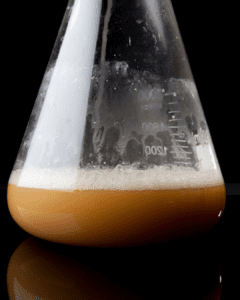
 Yeast Health: Choosing, Storing, and Pitching With Intent
As we continue moving up the Homebrew Skills Tree, we begin focusing more directly on the organism that makes fermentation possible: yeast. In an earlier post, we talked about sanitation, measuring fermentation, oxygen, and temperature. All of those topics connect to a single goal: creating an environment where yeast can do its work effectively. Healthy yeast is the foundation of good fermentation. When yeast is strong and well cared for, fermentation starts quickly, progresses smoothly, and produces the flavors you expect. When yeast is stressed or unhealthy, fermentation may stall, produce unwanted flavors, or behave unpredictably.
Understanding a little about how yeast lives and grows helps brewers guide the process with confidence.
Yeast Is a Living Organism
Brewing yeast is a single-celled fungus, usually saccharomyces or brettanomyces. Even though it is microscopic, it behaves like any other living organism: it needs the right environment, the right nutrients, and the right conditions to thrive.
During fermentation, yeast consumes sugar and produces:
- alcohol
- carbon dioxide
- flavor compounds such as esters and phenols
These flavor compounds help define the character of many beer styles. But yeast does not immediately begin producing alcohol when it enters the wort or must. It first goes through a short growth phase.
The Aerobic and Anaerobic Phases
At the beginning of fermentation, yeast uses oxygen to build strong cell membranes and reproduce. This stage is sometimes called the aerobic phase because it’s using oxygen for its metabolism. Oxygen allows yeast to produce compounds that strengthen the cell wall, helping the yeast build in numbers and tolerate alcohol later in fermentation. This is why brewers often introduce oxygen before pitching yeast using methods such as:
- shaking the fermenter
- using a wort aerator
- using an oxygen wand
Once the oxygen is depleted, yeast switches to anaerobic fermentation, meaning there’s no oxygen in its metabolism. In this phase, it converts sugars into alcohol and carbon dioxide. At this point, we try to limit oxygen exposure, since oxygen can begin to cause oxidation and flavor degradation.
Yeast Needs Nutrients
Like any living organism, yeast requires nutrients to function well, specifically nitrogen. Wort from malted grain usually contains most of the nutrients yeast needs. However, some fermentations, particularly wine, mead, and cider, where nitrogen is not readily available, may benefit from additional support. Many brewers add yeast nutrient during fermentation to help ensure yeast has access to important minerals and nitrogen sources. Healthy yeast with adequate nutrients is less likely to produce unwanted byproducts and more likely to complete fermentation successfully.
Temperature and Yeast Behavior
Temperature is one of the most powerful factors influencing yeast health. Each yeast strain has a preferred temperature range where it performs best. For example: many ale yeast strains prefer around 64–72°F, lager yeast often performs best between 48–55°F. Temperature influences how quickly fermentation occurs and which flavor compounds yeast produces. Higher temperatures tend to run the yeast at a higher rate than they prefer, which increases production of esters, which can create fruity aromas. In some styles this is desirable, but excessive warmth may produce harsh or solvent-like flavors. Managing fermentation temperature helps brewers guide yeast toward the intended flavor profile.
Understanding Yeast “Best By” Dates
Many of you have noticed that packages of yeast carry a “best by” or manufactured date. This date does not mean the yeast suddenly dies or becomes unusable. Rather, it indicates the point where the manufacturer guarantees that the package still contains enough healthy cells to ferment a typical five-gallon batch (about 100 billion all cells or 200 billion lager cells for a 5 gallon batch of 1.048 wort). In order to make that happen, they put way more cells in the packet than what’s required. Over time, some yeast cells naturally die off. As the cell count decreases, the yeast will still work, but at some point after the expiration the number of viable cells may no longer be ideal for the batch size. If you are unsure whether the yeast population is sufficient, a simple solution is to prepare a yeast starter. A starter allows the yeast to reproduce before pitching, increasing the total number of healthy cells.
Storing Yeast Properly
To keep yeast healthy as long as possible, it helps to store it correctly. Most liquid yeast should be kept refrigerated. Cooler temperatures slow the metabolism of the yeast and help maintain cell viability. Don’t freeze yeast, though .. the very low temperatures will cause the liquid in the cells to crystalize and rupture the cell membrane. Dry yeast is generally more stable and can be stored longer, but it should still be kept in a cool, dry environment. Regardless of the type, avoiding heat and temperature swings helps preserve yeast health.
Signs of Healthy Fermentation
When yeast is healthy and properly pitched, fermentation usually begins within 12–24 hours. Signs of healthy fermentation include:
- airlock activity
- foam or krausen forming on the surface
- steadily decreasing gravity readings
Tools such as a hydrometer, refractometer, or Tilt hydrometer can confirm that fermentation is progressing as expected.
Supporting the Yeast
Your parenting role during fermentation is largely about supporting the yeast. Healthy fermentation usually comes from a combination of:
- good sanitation with Star San or Iodophor
- adequate oxygen early in fermentation
- proper temperature control
- sufficient nutrients
- appropriate pitching rates
When these conditions are in place, yeast performs its work naturally.
A Skill That Improves Every Batch
Yeast health sits near the center of the Homebrew Skills Tree because it connects many other skills.
Sanitation protects the yeast from competition.
Oxygen helps it reproduce.
Temperature guides flavor development.
Measurement tools help track its progress.
As we gain experience, we learn to think of yeast not just as an ingredient but as a partner in the fermentation process. Taking care of our partner that’s doing all of the important, hard work is one of the most reliable ways to improve every batch.
We are passionate about yeast! Chat us up in the store or reply here in this story about your yeast experiences or questions.
Here are some links to our Disney Knuffels, nutrients, starter kits, and gravity measuring tools.
Cheers!
Grain Honey Yeast SCOBYs Hops Nutrients Flavorings Fermenters Equipment Kits